

Occupational Health & Safety Management Systems
(ISO 45001)
Benefits of the ISO 45001 Training
Learning Outcomes
Benefits of the ISO 45001 Training
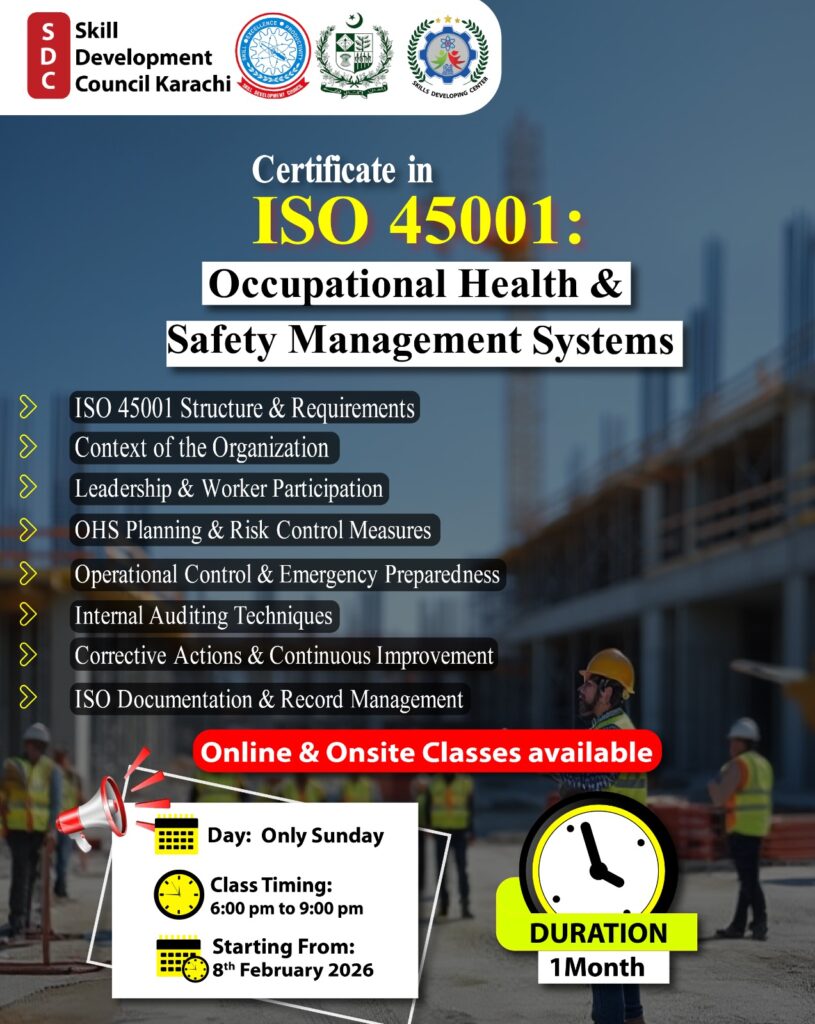
- Comprehensive Knowledge of ISO 45001
- Gain a clear understanding of the ISO 45001 standard, its structure, requirements, and implementation in organizations.
- Learn the principles of occupational health and safety (OHS) management aligned with international best practices.
- Enhanced Risk Management Skills
- Identify, assess, and manage workplace hazards systematically.
- Implement effective risk control measures to prevent accidents and incidents.
- Leadership and Worker Engagement
- Understand the role of leadership and management commitment in promoting safety culture.
- Learn strategies for worker participation to enhance safety performance and compliance.
- Practical Operational Skills
- Apply operational controls, emergency preparedness, and response procedures in real-world scenarios.
- Learn to maintain accurate documentation and records required for ISO compliance.
- Internal Auditing and Continuous Improvement
- Acquire skills to conduct internal audits to assess compliance and identify improvement areas.
- Learn how to implement corrective actions and foster continuous improvement in OHS management.
- Career Advancement and Recognition
- Strengthen your professional profile with a globally recognized ISO 45001 certification.
- Open opportunities in OHS roles across industries such as construction, manufacturing, oil & gas, healthcare, and more.
- Flexible Learning Options
- Evening classes on Sundays make it suitable for working professionals.
- Training available both online and onsite to match individual preferences.
Learning Outcomes
By the end of this program, participants will be able to:
- Understand ISO 45001 Requirements
- Explain the structure, clauses, and requirements of ISO 45001.
- Understand the importance of OHS management systems in regulatory compliance and workplace safety.
- Assess and Control Workplace Risks
- Identify hazards and assess risks in line with ISO 45001 standards.
- Implement effective risk control measures to prevent incidents.
- Enhance Leadership and Worker Involvement
- Promote a culture of safety through leadership engagement and worker participation.
- Facilitate communication and training to improve organizational safety performance.
- Develop Operational and Emergency Preparedness Plans
- Apply operational controls for day-to-day safety management.
- Establish procedures for emergency preparedness and response.
- Conduct Internal Audits and Implement Improvements
- Perform internal audits to evaluate compliance with ISO 45001.
- Apply corrective actions and continuous improvement practices to enhance OHS performance.
- Maintain ISO Documentation and Records
- Prepare, manage, and maintain required OHS documents and records effectively.
- Ensure audit readiness and compliance with international standards.
Start Date
16th October, 2026
Day
Fridays Only
Timing
8:15 PM to 10:15 PM
Duration
1 Month
Registration Fee
Rs.2000
Training Fee
Rs.15,000
Start Date
16th October, 2026
Day
Fridays Only
Timing
8:15 PM to 10:15 PM
Duration
1 Month
Registration Fee
Rs.2000
Training Fee
Rs.15,000