
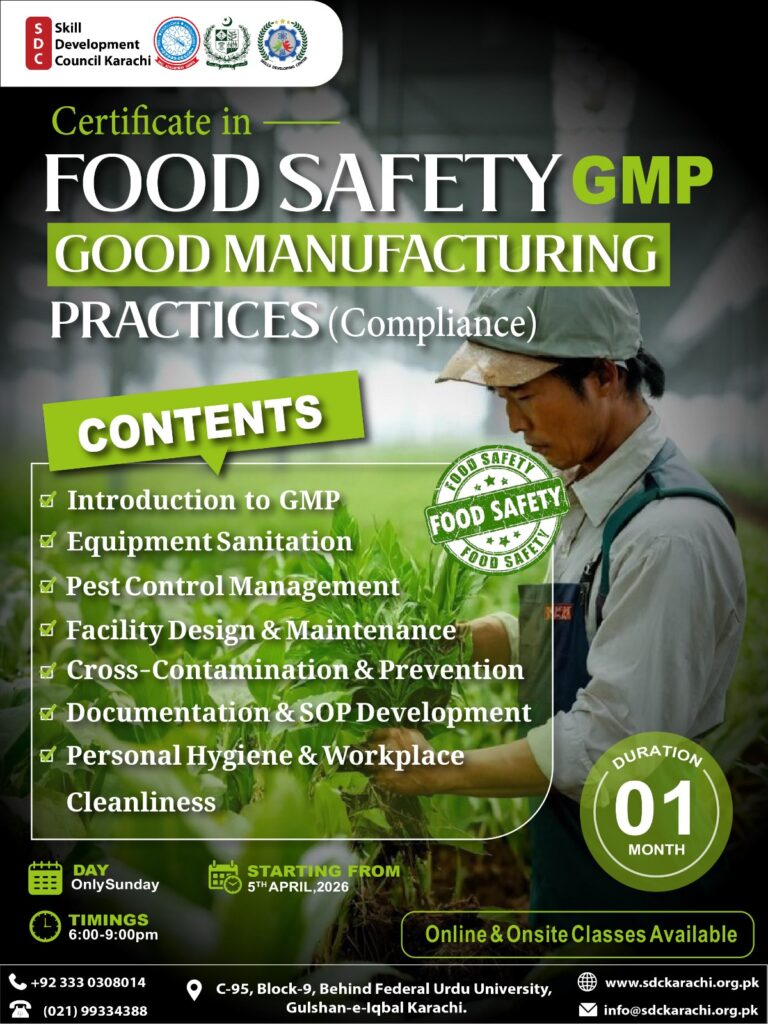
Food Safety – GMP (Good Manufacturing Practices)
(Compliance)
Benefits of the GMP Certification Training
Learning Outcomes
Benefits of the GMP Certification Training
1.Comprehensive Understanding of GMP
- Gain in-depth knowledge of Good Manufacturing Practices, a globally recognized standard in food safety and production.
- Understand how GMP contributes to product quality, safety, and regulatory compliance
2. Enhanced Workplace Hygiene and Safety
- Learn proper personal hygiene and workplace cleanliness standards.
- Reduce risks of cross-contamination and ensure a safe production environment.
3. Operational Excellence in Food Manufacturing
- Understand facility design and maintenance principles for optimal production safety.
- Learn best practices for equipment sanitation and pest control management.
4. Regulatory Compliance and Documentation Skills
- Develop and maintain standard operating procedures (SOPs) to meet industry and regulatory requirements.
- Prepare the organization for audits and inspections with proper documentation practices.
5. Career Advancement Opportunities
- Enhance employability in food manufacturing, processing, and hospitality sectors.
- Certification demonstrates practical knowledge of GMP, a key requirement for managerial and supervisory roles.
6.Practical Application
- Apply GMP principles immediately in your workplace to improve product safety and operational efficiency.
Learning Outcomes
By the end of this program, participants will be able to:
1. Understand GMP Principles
- Explain the fundamentals of Good Manufacturing Practices and their role in food safety.
2. Implement Hygiene and Sanitation Standards
- Maintain personal hygiene and clean work environments to prevent contamination.
- Apply effective cross-contamination prevention techniques.
3. Optimize Facility and Equipment Management
- Ensure proper design, layout, and maintenance of facilities.
- Implement equipment sanitation procedures to maintain safe operations.
4. Manage Pest Control Effectively
- Develop strategies to monitor and prevent pest infestations in production areas.
5. Prepare Documentation and SOPs
- Create and manage Standard Operating Procedures for food safety compliance.
- Maintain proper records to meet regulatory and audit requirements.
6. Promote a Culture of Food Safety
- Contribute to a workplace culture focused on safety, hygiene, and compliance.