
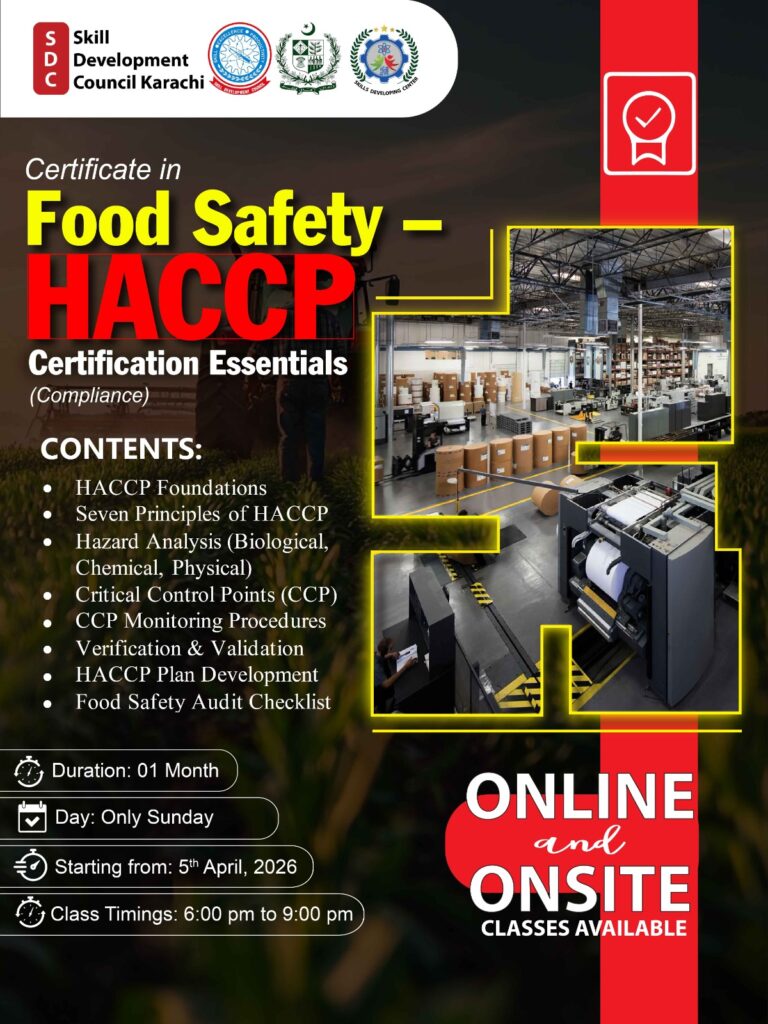
Food Safety – HACCP Certification Essentials
(Compliance)
Benefits of the GMP Certification Training
Learning Outcomes
Benefits of the GMP Certification Training
Benefits of the HACCP Certification Training
- Comprehensive Food Safety Knowledge
- Gain an in-depth understanding of food safety principles and hygiene practices.
- Learn the international HACCP framework, widely recognized in the food industry.
- Hazard Identification and Control
- Learn to identify biological, chemical, and physical hazards in food production.
- Understand methods to control, prevent, and mitigate risks effectively.
- Practical HACCP Implementation Skills
- Develop skills to establish Critical Control Points (CCPs) in food operations.
- Learn how to monitor CCPs, conduct verifications, and validate processes for safety assurance.
- Regulatory Compliance and Audit Preparedness
- Understand local and international food safety regulations.
- Prepare for food safety inspections and audits, ensuring organizational compliance.
- Career Advancement Opportunities
- Enhance employability in food manufacturing, processing, catering, and hospitality industries.
- Certification adds credibility and is often required for managerial roles in food safety.
- Flexible Learning Options
- Classes offered online and onsite, ideal for working professionals.
- Evening classes make it convenient to gain skills without affecting regular work schedules.
Learning Outcomes
By the end of this course, participants will be able to:
- Understand HACCP Principles
- Explain the seven principles of HACCP and their application in food safety management.
- Understand the role of HACCP in preventing foodborne illnesses.
- Perform Hazard Analysis
- Identify biological, chemical, and physical hazards in food processes.
- Assess risk levels and determine control measures effectively.
- Develop and Implement HACCP Plans
- Establish Critical Control Points (CCPs) in food operations.
- Develop monitoring, verification, and validation procedures for each CCP.
- Monitor and Verify Food Safety Processes
- Apply CCP monitoring procedures to ensure safety standards are met.
- Perform verification and validation checks to confirm effectiveness of food safety measures.
- Conduct Food Safety Audits
- Use audit checklists to evaluate compliance with HACCP standards.
- Recommend corrective actions for continuous improvement of food safety systems.
- Promote a Food Safety Culture
- Contribute to creating a safe and hygienic workplace environment.
- Educate team members on best practices and regulatory compliance.